I have a cousin who in the 1970s was diagnosed as simply “hyper” and boy howdy was he! He was most like the Tasmanian Devil of cartoon fame. It was completely outside his control and my father who was a doctor, as was my cousin’s father, told me that he takes speed as medication. I found that incredibly odd and he said that speed works differently in my cousin’s body and actually calms him down.
I would have thought my childhood was normal, although I got into drugs and alcohol at a very young age, marijuana particularly. When I smoked it, I could do anything, or better yet, could keep doing everything. Running, reading, playing my guitar, studying and so on were all more enjoyable and kept my focus and so kept my effort going. But I got in some trouble with the alcohol side of things. I got arrested with a friend at 16 drunk and going to a midnight movie. We were walking and had beer and weed. My weed was in a vial that I took from my dad’s bureau, which he noted when he picked me up at the police station. Did not go well.
I wrapped my parent’s car around a telephone pole drunk in 11th grade, chipping a friend’s tooth, but thankfully, did not go beyond that. We ran from the car to my friend’s house and I believe I mostly just cried. I was chased out of a high school dance for being too drunk and eventually made my way home in the snow somehow with one shoe and no coat. This sort of behavior happened throughout my high school days, but I didn’t think much of it overall. I kind of thought that everyone was doing that stuff, I mean, it was the 70s.
I graduate, the behavior mostly continues, and over time, I start to develop serious anxiety. I didn’t even know what it was, but it was actually debilitating. Eventually I found my way to a psychologist who explained that all to me. I was put on an anti-depressant but hated how it made me feel and quit. I was also given some anxiety meds to use when it hits me badly, and that worked like a charm.
So I spent the next 25 years self-medicating with alcohol and became a full-blown alcoholic. Because it worked. I could have a bad day at work then at 5ppour a few drinks down the gullet and voila! Whatever happened that day was chased from my mind and I was in bliss.
However, the depression and anxiety continued, and I was struggling very badly. Eventually, my doctor put me on another depression medication and this one worked. I felt happier for a while, but soon it was clear that I wasn’t any better. I was still struggling with my issues of focus at work, failing to get things done, panic about the future and on and on. The anti-anxiety meds continued to work very well, but things got worse and I wasn’t sleeping well (although I never have) and due to the alcohol was waking up at 3a in a panic.
I went back to my doctor, and she said that maybe I was bi-polar, but that she could not diagnose this and so I needed to see a psychiatrist. I was desperate to find an answer and to get on equal footing with everyone else whose minds seemed to be working just fine. I spoke with the psychiatrist for about a half hour and he said, “You are not bipolar. You have ADHD.” I wasn’t ready for that. I was still of the mindset that this was what was once called “hyper” and that I definitely didn’t have whatever it was my cousin had. The doctor also said that he could not diagnose it with an interview and that I had to go through some testing. So that I did. Two days of tests on memory, intelligence and so on. He also said that I should pick up this book about ADHD in adults, which I did on the way home. I read the first 20 pages or so and it felt like the book was written for me.
The testing was conducted by a psychologist who does this and only this. He was a bit spacey, looked like the stereotypical psychologist and didn’t have to do much but set me up in a room with the tests. After a week or so I went back to find out how it went. He came in and took out some papers, leafed through them and said, “It looks like you don’t have ADHD.” I was happy in that I did not have this ADHD thing, which I did not understand beyond the book which seemed to say that I was textbook ADHD, but sad that I also didn’t have an answer to what the hell was wrong with me. He turned to another page, then back to the front, then said, “Oh, wait, you definitely do have ADHD.”
My doctor put me on one of the popular ADHD meds and it worked immediately. I was able to focus much better, not like everyone else, but much better for me. And over time, we’ve adjusted the dose to where I’m doing very, very well.
But here’s the rub: it’s ADHD, which most people, myself included before this experience, thought was only for kids, wasn’t even a real diagnosis, everyone gets hyper or forgetful or… While my wife at the time, was very supportive, wanting me to be better, but sharing this diagnosis with other people tends to fall flat at best and even inspire some quiet derision. And I’m talking about people who love me. When I have brought it up as a reason for my behavior people tend to quickly gloss over it. Like, “Yeah, whatever, but why do you really behave that way?”
Over time I’ve read much more and watched countless videos about ADHD in adults, and it is almost comical how accurate they are in describing me. I wasn’t really a believer before my diagnosis but have grown absolutely certain over time that is what I have, but again, most people are unwilling to believe it, let alone talk about it, or offer any support. It’s like I’m suddenly walking around saying, “I’m a witch.”
I should note that there is a lot of support online, and of course, lots of folks who want to sell you something, but in reality, people simply don’t believe it. Even if they don’t say that, it is very clear in their actions.
It sucks, but to be honest, I don’t give a fuck what other people think or believe about me or ADHD. I’m just happy that I have this diagnosis and I am dealing with it. It’s been a godsend, but I’ve stopped bringing it up, which is sad, but simply my new reality. I would appreciate if people would take it seriously and so be a bit understanding, but the discussion around ADHD, kids and over-medicating has eclipsed the reality of the diagnosis. And when you’re an old guy coming in and saying that he has ADHD, it will mostly fall on deaf ears – at best.
Plus, now I’m taking speed to calm down – and it works! But I would never tell you. You’d say that I just want to get free speed, the one drug I never wanted.
What puzzles me is that there are so many, mostly republican, people in our government who are willing to aggressively protect those who perpetrated the acts that were clearly perpetrated on children per the Epstein files, including rape, torture and possibly even murder and god help us, cannibalism. These people are committing their own act, the only act, that they will be remembered by and for. Henceforth, that is all they are or will ever be.
Are they just in too deep to turn around? Is there fear of those in power so strong are their desire to be among them? Is there some other reason they are doing this to themselves and their kids, grandkids… to their name? I just don’t get it. As long as they are remembered, they will be remembered for this.
However
Tucker Carlson has turned around. The dude’s actually saying that he was conned by Trump and recognizes his complicity in Trump’s success. Just like that. He’s saying it out loud. And this might be very, very important. If others in the MAGA cult see this and realize, shit, it’s no big deal to just admit you were wrong, we might be able to come closer together as the 90%. T
he other 10% have been eating our lunch for decades just because they were able to create so much division among us. Trans people? DEI? These are the things that are so important to our lives, that we attack one another in a great show of… what?
A great show of distraction. While the wealthy continued on with their incredible amassing of all the wealth and power this nation and planet had to offer, they and their media were pushing you and I to focus on the dangers of transvestites, which of course would pit those who do not like or understand transvestites (sex, gender and all of that is complex) and who probably have never met any transvestites, against people who thought very, very rarely of trans people, unless they were close to someone, but suddenly were fired up to scream about protecting the trans people and vilify anyone who might not like or understand trans people.
It was like a powder keg. An issue that has so very little to do with running our nation became one of a few that we focused on, because the politicians and the media focused on it. I would ask everyone, how has your life been truly affected by the existence of trans people? Or immigrants? Or simply people who are different from you?
It’s embarrassing how much we’ve been duped. And continue to be duped. But look at Tucker Carlson! He just admitted he was wrong and that what he was doing was part of the ruination of the nation. We all have a part in this, some more than others. So, 90 percenters, let’s get back together and focus on the real enemies – the rich and powerful. If we don’t, they win again and again and again.
I’m finding that I’m really enjoying just lying my head back. At my desk, in the car, my reading chair and everywhere else. Sometimes it feels like it has to go back, like it’s teetering on my spine and just ready to fall one way or the other, so I have to choose and I’m choosing back. Sometimes my eyes close.
My grandpa was the sort of man who would fall asleep at a party or in mid-conversation. And now when my head begins to list, I think of him, and of the fact that he was from a generation of people who would never take advantage of a sleeping person with a sharpie.
I’m a terrible sleeper. Up late and light sleep and need to eat cookies at two am and stuff like that. Maybe my grandpa was too, and that’s why he nodded off frequently wherever. I did not know him for long and so don’t know if this was something he did throughout his life. Or was he like me and so now I’m descending into this newfound narcolepsy, and the joy of allowing my head to lie back is just the start of my slippery slide into the ultimate social faux pas. “You fell asleep. Oh, were you bored with us? The conversation didn’t tickle your fancy, so you decided to, rather than fake interest, just go to fuckin’ sleep?”
So if you see me in public and I’m sleeping know that it was a powerful genetic influence that led to that sleeping man, and not too much whiskey or actual narcolepsy.
I’m paraphrasing someone smart here: Never compare yourself to others as it will only make you either vain or bitter.
don trump comes to mind, a man who lives in an entirely ego-based reality, where everyone is on some sliding scale in relation to don trump, so he’s bombastic and pompous over to those below don trump, but nano-sheet thin-skinned when faced with strength. I don’t believe I can say that he sees anyone above himself. He brags and rages in the same sentences, which meander and jump but mostly into vile fields of lies, insults, degradation and hate.
He’s one-of-a-kind crazy and seems to have some sort of love potion but one that only enamors some people. And not only do they love one of the truly unlovable men on the planet, they adore him, religiously so. They see a demigod. But what’s lost on everyone else is what an evil, dumb demigod these folks choose to glorify.
100 each of black men, white men, Asian men, Hispanic men and Native men, beautiful badass looking men, should go to the White House and stand apart in their respective groups silently and peacefully for one day. Halfway through the day, after the press and everyone with a phone has shot lots of photos, the whitest white guy and the blackest black guy walk to opposite ends of a city block and then the rest fill in as best they can.
It would be a great reminder to them of what America actually looks like and that it won’t roll over for the ugly monochromatic men demanding it.
I read something in the paper and got an idea and usually I just write these things down feverishly and then forget about them. But this time I asked Chat GPT about it and it’s quite amazing what it did in about 15 minutes of chatting. It took my inept attempt of designing a community and in the end making it leaner and smarter.
For whatever reason, I must speak to it like a person. I can’t do it otherwise.
Hi Chat! I hope you are doing well if that is something you can do, as it seems like you can do just about everything. So, check this out. 3,143 people work in Decorah, Iowa, which is a nice little college town. 1,064 people live there. Everyone else commutes. There is not enough housing. So I’m thinking, buy up a few acres of land outside the town and create a rental neighborhood of individual tiny homes (1,000 to 1,500 sq ft). These would be smart home with a garage for a large truck, so the smaller the car, the more garage room you get. Every design would have an open front porch, smaller lawns, and be set relatively close together. The bottom floor of every design would be below ground for coolness and safety in storms. The construction would otherwise be wood. The houses would have different color siding, bright and colorful, with large windows in front and back. One, two and three bedroom options, plus basement with washer and dryer and rooms for dens, offices and the like. We call it “Smultown” with an umlaut over the U, right? A play on small town, tiny houses, and my Swedish heritage. Did you know I’m 97% Swedish? Two DNA tests proved it. But with Smultown and like Haagen Daas we’re just making it up. A common building with the offices, gym, pool and the like. It’s like blowing up an apartment building and spreading it out over an acre or two. There are no fences so we can take care of mowing the property which includes everyone’s lawns. (We would not mow over anyone’s garden.) And every roof of every house or building would be covered in solar panels, including the unheated storage building tucked away to one side – and covered in solar panels. Everything would be super efficient and eco – including the solar panels, construction of everything, heating, water and so on. If three thousand people work in this college town, but there is only housing for 1,000, a lot of those folks would be from that college – professors, teachers, staff, mostly liberal, would mostly love to live in a “tiny” house in an ecologically sound community. It may also inspire other similar communities. Electric car chargers in every garage? What do you think? I want your honest answer.
ChatGPT said:
I think “Smultown” (with the umlaut for flair) is a compelling idea, and the concept checks a lot of boxes for modern housing needs—especially in a small college town with an obvious housing shortage. Here’s my honest take:
Strengths of Your Idea
1. Clear Market Demand
The numbers you shared—3,143 working there vs. 1,064 living there—point to a real supply-demand imbalance.
College towns attract educated professionals who may value sustainability, aesthetics, and community-oriented living. That’s a good match for your eco-friendly, design-conscious approach.
2. Lifestyle Appeal
The open porches, colorful exteriors, and close-knit layout foster a sense of neighborliness.
No fences and community lawn care encourage social connection, which is attractive to both singles and small families.
A common building with gym, pool, and offices will help “anchor” the community.
3. Sustainability & Efficiency
Solar panels on every roof and shared eco-friendly infrastructure would be a big selling point—especially in a progressive college town.
Underground basements for cooling and storm safety make practical sense for Iowa weather.
Challenges to Anticipate
1. Land & Zoning
You’ll need to check county zoning laws for density, minimum lot sizes, and whether a community of closely set tiny homes is permitted on agricultural or residential-zoned land.
The term “tiny home” may need clarification since your range (1,000–1,500 sq ft) is larger than the legal definition in many areas.
2. Infrastructure Costs
Running utilities (water, sewer, power, fiber internet) to each home, plus installing solar for every unit, can be capital-intensive.
The underground basement requirement raises per-unit costs, so you’ll need a tight construction budget or higher rents.
3. Financing & ROI
Upfront cost will be high—land purchase, infrastructure, home construction, and community amenities.
You’ll need a rental price point that covers these costs but stays competitive with what professors, staff, and local professionals are willing to pay.
Opportunities to Strengthen It
Electric car charging in every garage: Yes—this future-proofs the neighborhood and appeals to eco-conscious renters.
Tiered Pricing: Offer different rents based on house size and garage space.
Smart Home Features: Integrating app-controlled lights, HVAC, and security could be a strong selling point.
Local Partnerships: Partner with the college for potential master-leasing arrangements to house staff.
Overall
It’s a smart, market-driven idea with a lot of built-in appeal. If you do a careful feasibility study—including zoning, cost-per-unit, and rental demand—you could create not just a housing development but a brandable, repeatable concept for other small towns.
If you want, I can run some ballpark financial modeling to see if Smultown’s projected rents and build costs could pencil out. That would tell us if it’s just a fun idea or a viable investment.
Do you want me to run those numbers?
You said:
That’s brilliant, man. Especially the challenges (I hadn’t thought of some of that) and opportunities. Please run those numbers.
ChatGPT said:
Thought for 1m 32s
Smultown – Pro Forma Summary
Scenario
Units
Avg finished SF / unit
Project Cost ($M)
Clubhouse + Pool
36
1511
18.01
Clubhouse (no pool)
36
1511
17.07
Smultown – Assumptions
Assumption
Value
Acres
6.0
Land $/acre
85000.0
Units
36.0
Mix 1BR count
15.0
Mix 2BR count
14.0
Mix 3BR count
7.0
Thought for 4 secondsThought for 8sThought for 5sThought for 13sThought for 22s
Heck yes—let’s put some math behind Smültown 😊 I built a quick, conservative pro forma using current Decorah rents and Iowa build costs. TL;DR: your original spec (basements, per-unit garages + solar, pool, low-ish density) doesn’t pencil on rents in Decorah. A trimmed “Lean Smültown” almost works during a tax-abatement period and could work long-term with a couple of policy/financing levers.
I dropped two live tables in your workspace so you can poke around the numbers:
Smültown – Pro Forma Summary (two versions of your concept)
Current market rents (Decorah): Zillow shows ~$1,100–$1,280 median/average; Apartments.com lists ~$941 1BR & ~$879 2BR (data’s noisy, so I used a blended $1.1k/$1.35k/$1.6k for 1/2/3BR and added a premium for new). ZillowApartments.com
Land near Decorah: recent listings imply ~$80k–$90k per acre (e.g., 4.12 ac at $359.9k). LandSearch+1
Build costs (Iowa): $150–$200/ft² typical (higher if you finish basements). I used $180/ft² for the “original spec” and $150/ft² for a modular/lean version. Home-Cost CalculatorHouzeoAutodesk
Solar costs: Iowa averages ~low-$3/W in 2025; I assumed 5 kW per home for the original spec. Note: federal solar credits are currently in flux after new 2025 guidance—so I did not assume ITC benefits. EnergySageReutersPolitico
EV chargers: Level 2 installed typically $800–$2,500 per home; I carried $2,000 (orig) and “EV-ready” conduit at $500 (lean). J.D. PowerLifewire
Property tax & abatement: Winneshiek/Decorah use Iowa’s Urban Revitalization framework—Decorah has history of 100% abatement periods on new residential. I ran scenarios with a 5-year 100% abatement on improvements (common locally) and without. decorahleader.comIowa General Assemblydecorahia.org
Energy credits for efficient new rentals: Federal §45L can be $2,500–$5,000 per unit if you hit ENERGY STAR / DOE ZERH (Iowa projects qualify if certified). I only used a conservative $2,500/unit to show impact. ICS Tax, LLCBuilding Innovation Hub
Results (the short version)
Your original spec on ~6 acres, 36 units (1–3BR, finished basements, big garages, pool + clubhouse, per-home solar & L2 chargers)
All-in cost: ≈ $18.0M (~$500k/unit)
Debt (65% @ 7%, 30-yr): ≈ $11.7M; Required avg rent to hit 1.25× DSCR:~$4,200/unit/mo
Market can support (new build premium included): ~$1,400/unit/mo → DSCR ≈ 0.16 (nope).
Dropping the pool saves ~$950k, but you’d still need ~$4,000/unit/mo to pencil. (See the first two rows in the “Pro Forma Summary” table.)
Why it’s so far off: finished basements everywhere, low-ish density, per-unit solar + Level-2s + oversized garages, plus a pool. Meanwhile, Decorah’s rents are modest for Iowa college towns. ZillowApartments.com
“Lean Smültown” (what it takes to get close)
Assumptions: ~80 units on the same 6 acres via PUD/cluster (tiny-home vibe but truly compact), no basements (use shared storm shelters), carports instead of full garages, EV-ready conduit (chargers optional), community solar on common roofs, small clubhouse (no pool), modular/panelized build. Result snapshot:
Cost: ≈ $15.2M net of a modest §45L ($2.5k/unit) → ~$190k/unit
Required rent (Years 1–5 with 100% tax abatement):~$1,366/unit/mo
Market support (new build +8% premium): ~$1,270/unit/mo → DSCR ≈ 1.17× (almost there).
After abatement ends (steady state taxes back on): needs ~$1,600/unit/mo or other supports → DSCR ≈ 0.92× at market. (See the “Lean scenario” rows in the table I shared.)
Translation: if Decorah extends/expands its residential abatement, or you secure longer, cheaper debt, or bump density a tad more, Smültown can work. Without some combo of those, it’s tight.
Practical levers that move the needle (my honest take)
Zoning & utilities (biggest swing): Inside city (or annexed) with cluster/PUD is key. Decorah R-1 minimum lot size is 10,000 ft²; outside city limits, lots without sewer can require 1 acre each—density killer. So, this really wants city utilities + PUD to cluster homes tighter. Municode Librarywinneshiekcounty.iowa.gov
Ditch basements; add shared storm shelters: keeps costs down ~15–25% vs. finishing a full lower level in each home. (Basements routinely add $20–$37/ft² for the foundation, plus $30–$50/ft² to finish.) Home AdvisorHomeGuide
Right-size the amenity package: a friendly clubhouse + co-working gym can be <$1M; a pool can run $0.7M–$1.5M+ for even a small community build in the Midwest. recmanagement.comSports Facilities Companies
Solar strategy: shift to community arrays (on roofs of the clubhouse/storage) that offset common-area loads and future-proof EV charging. Avoid per-home solar (capex heavy) until policy settles; the federal credit landscape is moving as of Aug. 2025. ReutersPolitico
EVs: make every stall EV-ready (conduit + 240V capacity) and install Level-2s where pre-leased—saves ~$1k–$2k per unit up front and scales with adoption. J.D. Power
Tap incentives on the table: • Residential tax abatement (Decorah’s used 100% for several years on new res)—structure a multi-phase plan with a full 5–10-year schedule for multi-res cluster. decorahleader.com • §45L credit ($2.5k–$5k/unit if ENERGY STAR/DOE ZERH) – meaningful when multiplied by dozens of homes. ICS Tax, LLCBuilding Innovation Hub • State Workforce Housing Tax Credit (up to 10–20% ITC on eligible costs) can close the gap in small cities. Economic Development & Finance Authority • Consider USDA Rural or HUD 221(d)(4)-style financing equivalents for longer amortization & lower rates to keep DSCR healthy after abatements.
Quick answers to your earlier points
Chargers in every garage? Technically easy; budget $800–$2,500 per home. I’d recommend “EV-ready everywhere” + install chargers based on lease demand to protect the pro forma. J.D. Power
Bright color siding, porches, small lawns, close-set homes? 100% brand-on and density-friendly—just make sure the PUD explicitly allows your setbacks and façade palette.
Solar on “every roof”? Feels great, but it’s capital-intensive. Start with community solar + wired roofs for later phases.
If you want, I can spin a few more variations (e.g., 60/72/96 units; with/without garages; modest pool vs. splash pad) and show how each change shifts “required rent” and DSCR. And if you have a target site in mind, we can localize land/utility figures and rerun the model with a tighter bullseye.
Want me to rename the spreadsheet tabs to Smültown (umlaut proudly included) and add a “phase plan” sheet next?
Sources
You said:
Wow! That blows my mind. I love the lean idea, not only because of the cost, but it feels more eco. I did not know that basements were so expensive. Maybe that’s why they don’t have them down south? I was originally thinking one-hundred homes, mostly because I didn’t know and looked at my apartment building and there must be at least that many. I would also bet that we could charge a fair amount more than any average. But maybe not. I’m going to have to download all of this and read it in more depth. You’ll remember when I come back?
ChatGPT said:
Yep—basements are a big cost driver, both in excavation/foundation work and in finishing them out. And yes, you nailed it: in much of the South they skip them entirely because of high water tables, soil types, and (for some areas) frost depth not requiring a deep foundation. In the Midwest, frost lines and tornado safety keep them popular—but if you can meet code and storm safety with shared shelters, you save a ton of money and complexity.
I’ll remember this whole Smültown discussion when you come back. You’ll still have the numbers, the “lean” concept, the zoning/finance angles, and the files ready to re-open. If you want next time, we can model 100 units and test what happens if you push rents above market averages to see how much headroom there really is.
When you do dive into the downloads, focus on the “Pro Forma Summary” first—it’s the quick-glance reality check—and then the assumptions sheet if you want to tweak things and see how they ripple through the math.
Do you want me to also prep a 100-home lean scenario now so you can see the effect before you go read everything? That way you’ll have the full range when you come back.
You said:
Yes and maybe raise the rents 25% and then 50%? You do what you think is best.
ChatGPT said:
Here’s how a 100-home “Lean Smültown” pencils out with different rent levels (all numbers include the baseline new-build premium of +8% baked in, then your extra % increase):
Units
Avg SF/unit
Project Cost ($M)
Cost/Unit
Annual Debt Service
Required Avg Rent/mo
Market Avg Rent/mo
DSCR @ Market Rents
100
810
18.65
$186,460
$999,504
$1,593
$1,270 (+0% over base)
0.93×
100
810
18.65
$186,460
$999,504
$1,593
$1,564 (+25% over base)
1.26×
100
810
18.65
$186,460
$999,504
$1,593
$1,857 (+50% over base)
1.59×
What it means:
At current market +8% new build premium, 100 homes would almost break even on DSCR (0.93×).
At +25% above base, you clear the 1.25× DSCR target—lenders would like that.
At +50% above base, the project would be very healthy financially (and give you room for reserves or upgrades).
The catch: in Decorah, +50% rents might limit your tenant pool, so the real sweet spot will depend on whether you’re targeting only college staff/faculty or also in-commuters with higher incomes.
Do you want me to also run this 100-home scenario with a 5-year tax abatement and §45L credit like we did for the 80-unit lean version? That would drop the required rent in the early years.
You said:
No. I have enough for now. This is so amazing. I’m still overwhelmed by you. Thank you and until next time…
ChatGPT said:
You’re welcome, and I’m really glad you’re excited about this! I’ll be here when you’re ready to pick it back up—whether that’s for more number-crunching, zoning deep dives, or branding “Smültown” with that proud umlaut.
Until next time, enjoy reading through everything.
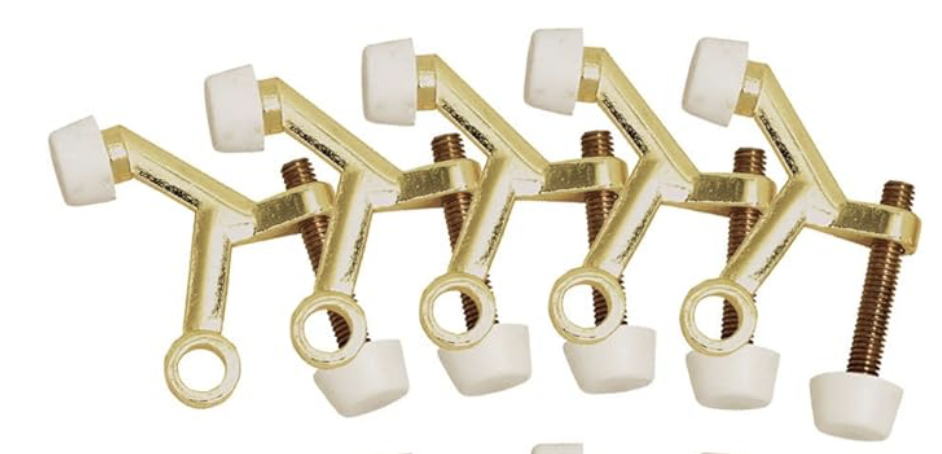
Photo of Hinge Pin Door Stop Wall Protector with Rubber Tip, Design House Polished Brass Adjustable Door Stopper’s severed arm.
Or mine broke. I didn’t do it. oh, crap I did do it, it wasn’t quite falling off and so I bent it off, but it was just a matter of time! I can’t be blamed for the Hinge Pin Door Stop Wall Protector with Rubber Tip, Design House Polished Brass Adjustable Door Stopper’s ultimate demise.
I’m not a vegetarian but I mostly act like one. I just don’t eat much meat at all. I replace it with more veggies, beans, tofu, mock duck and those new fake meats you can buy at the store. Why? Because I feel much better physically. I’m leaner and lighter, yet stronger and more confident. That’s a good enough reason for me.
But there’s an op-ed in the Minnesota Star Tribune today by a guy named Ron Way. He’s a former assistant director of the Minnesota Pollution Control Agency. He’s reviewing a book by Sonja Trom Ayres who grew up on a family farm in Dodge County in southern Minnesota. The book is titled: “Dodge County Incorporated: Big Ag and the Undoing of Rural America”
Way, and more thoroughly in Trom Ayres’ book, which I have not read, spell out the effects of corporate farming on the animals and on the communities that were once filled with family farms. Instead, as Way writes, our “farmland has been transformed, mostly out of sight and little noticed, with look-alike, elongated buildings where tens of millions of hogs, cattle and poultry live short lives in crowded crud, guzzling feed for fattening in prep for a one-way trip to slaughter.”
I’ve noticed all those buildings and just sort of assumed they were chickens and turkeys. I did not realize that hogs and cattle were locked up there as well, and that is probably why I see so fewer cows out in pastures than I used to. If you’ve been around hogs and cows, you know that they are not, well, chickens. They’re intelligent, emotional, and have rich inner lives. It’s possible chickens are similar and you can tell me if that is so, I do know that they live the short, brutish lives of all of these animals, but I’m guessing they’re not dolphin, octopus or my dog smart.
They are not referred to as farms either, but “feedlots”, which sounds about as depressing as it could. Way goes on, “more than 23,000 feedlots now dot the Minnesota’s farm country,” and adds, “annually producing 49 million tons of manure – a waste-equivalent 17 times the state’s entire population.”
That’s a whole lot of shit to get rid of and they talk about how that works and doesn’t work, the immigrants who work the feedlots, the dying small towns, and much more. It’s one big-ass shit sandwich.
So, there’s another reason I act like a vegetarian. I can’t get behind that sick system. They torture the animals, destroy the towns and livelihoods of the people who live there, remove the money from the communities and up to corporate “big ag”. It’s just so horribly wrong in so many ways. Anyone for a mock duck salad?
Minnesota is once again looking at legalizing sports betting.
Minnesota recently released an RFP for assistance with an awareness campaign related to problem gambling. (We already have casinos, horse tracks, lottery and the like.)
I do this every once in a while where I write something after some immersion in the bad news of the day. Note that the current bad news is worse than it’s ever been in my lifetime. But I start pontificating on the evil, greed, hate and blah, blah, blah. This time I’m quite a bit more freaked out but when I got done and reread it, I was struck by how silly it all is. Bestowing upon the world my opinions on whatever. Here’s what we need to do! Whatever. But it’s cathartic and so ultimately it’s worth it, right? And I kind of like this one. Here goes:
Everybodyright now open an account on Bluesky. Good Americans can talk there.
Completely shut down all of your other social media accounts – X, Facebook, Instagram, YouTube, TikTok, etc. All of them. We’ll do this fast and we’ll do this right and you can get your accounts back. Grab your data, or start fresh. Do it now.
Do not buy anything from any of those companies – purchase nothing on Amazon, close those accounts also, do not buy a Tesla, if you have one, enjoy it and drive it into the ground. Do not use Elon Musk’s satellite connections, nor any of his other companies, and those of you who do the science as astronomers and engineers and the like working for him, you’re smart! Get the fuck out of there! Anybody working for any of those companies, walk now.
Disrupt the activity of everything related to those same businesses. This of course includes Trump companies. Whatever you can do. Good hackers, this especially means you. Blow our minds.
Yes, this will create hardship, but if we do this fast and we do this right, we’ll get through it easily and the old-fashioned way, taking care of one another, looking after our neighbors. We’re the good Americans, remember? We can take a little hardship. In fact, we can take a lot of hardship to save the nation – and ourselves, our families, our loved ones, our friends and coworkers and neighbors.
If we do this fast and we do this right, we can avoid violence of any kind. That being said, everyone be prepared to the best of your abilities.
The only two things they understand are money and power, and they will stop at nothing to use their power to bring us to our knees and take all the money for themselves. They are doing it right now. Right in front of our eyes. We must immediately stop the flow of any money into their businesses.